In construction, delays rarely arrive alone.
They bring cost pressure, sequencing issues, strained stakeholders, and the sudden discovery that a “minor procurement issue” can quietly move an entire programme off course.
That is why supply chain disruption is no longer just a logistics concern. It is a project delivery concern.
And in the Philippines, that matters even more now. The construction market was projected to reach PHP 1.94 trillion in 2025 and continue growing at a 6.6% CAGR from 2025 to 2029, meaning demand is still expected to expand steadily year after year. That also means tighter competition for materials, specialist packages, and reliable delivery windows.
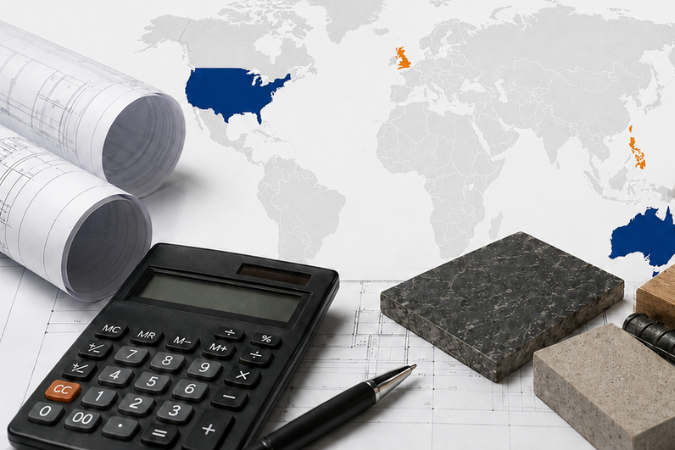
At the same time, the Philippines imported USD 134.20 billion worth of goods in 2025, up 5.2% from the previous year, a useful reminder that many project inputs still rely on overseas manufacturing, shipping routes, and port movement. When those networks tighten, local project schedules feel it too.
“A schedule delay rarely starts on site. It often starts when procurement is treated as paperwork instead of strategy.”
A common misconception in project planning is that delay begins when site work slows down.
In reality, it often begins much earlier, when long-lead materials are not identified soon enough, supplier risk is not assessed properly, or imported packages are treated like routine purchases instead of schedule-critical decisions.
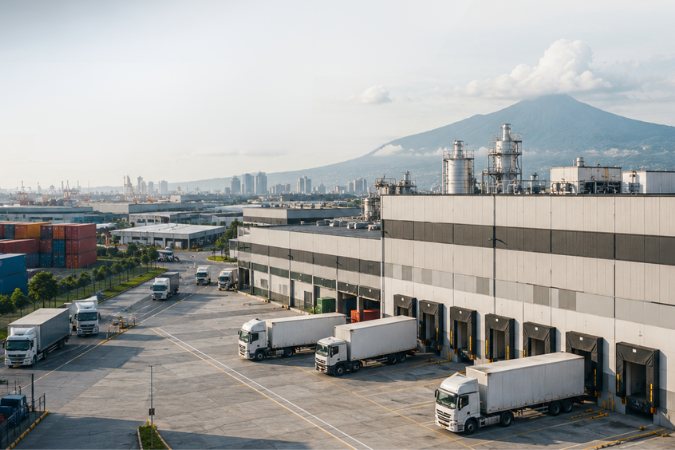
That risk is not theoretical. Global container shipping schedule reliability fell to 62.8% in December 2025, while the average delay for late vessel arrivals worsened to 5.04 days. In practice, that means nearly 4 in 10 sailings missed their schedule, and late vessels were arriving about five days behind on average. On a live project, that is more than enough to trigger a very expensive domino effect.
Especially when those delays land on items like façade systems, elevators, switchgear, gensets, or specialised MEP equipment.
A schedule can absorb only so much optimism before it starts invoicing people for it.
The trouble with supply chain pressure is that it does not always show up as one spectacular price shock.
Sometimes it shows up as a steady drip of cost movement across multiple trades, enough to erode contingency and squeeze procurement flexibility.
In March 2026, the Construction Materials Wholesale Price Index in the NCR rose 1.1% year on year, up from 0.2% in March 2025. That index tracks how wholesale prices for common construction materials are moving in Metro Manila, so even a seemingly modest increase is a sign that procurement costs are starting to edge up again. The PSA also noted that electrical works rose 0.9% after a 0.1% decline in the previous month, showing how quickly pressure can return even within a specific materials group.
That is the kind of movement teams ignore at their own expense.
Because the real issue is not just whether prices go up.
It is whether those price changes hit after design decisions have already hardened, supplier options have narrowed, and the project team is left negotiating under pressure instead of planning from a position of control.
Supply chain disruption is often discussed as a commercial issue.
But it becomes a delivery issue very quickly.
A recent Philippine study on public-sector construction delays found that delays in the delivery of materials ranked among the top causes of delay, with a relative importance index of 0.870. Shortage of materials also ranked high at 0.830. On a scale where figures closer to 1.0 signal a stronger contribution to delay, those numbers place both issues firmly in major-problem territory.
That matters because material delays do not stay neatly inside procurement.
They affect mobilisation, sequencing, labour productivity, subcontractor coordination, approvals, and often the overall credibility of the schedule.
By the time a team starts saying, “We are only waiting on one package,” it is usually already waiting on much more than that.
This is where stronger advisory and procurement planning make a real difference.
Better-performing projects do not wait for shortages to appear before adjusting. They map exposure early and treat procurement as part of the delivery strategy, not an administrative afterthought.
That includes:
In volatile conditions, early procurement planning is not over-management.
It is scheduled protection with better manners.
A volatile market exposes one of construction’s oldest bad habits: confusing the lowest price with the lowest risk.
They are not the same thing.
A package awarded too cheaply, too late, or to a supplier without enough capacity can look efficient in the tender summary and still become painfully expensive in execution.
That is why best value procurement matters. It does not mean overpaying. It means assessing cost together with capability, reliability, lead time, and substitution risk.
Because a cheaper package that arrives late, changes twice, and requires emergency decisions is not actually cheaper.
It is just better at hiding the full bill until later.
At JCVA, we help owners and project teams reduce supply-driven risk by bringing procurement strategy into project planning earlier.
That means looking beyond price tags and asking the questions that actually protect delivery:
Our role is not just to buy earlier.
It is to help teams decide earlier, package more intelligently, and protect commercial and delivery outcomes before supply chain issues start dictating both.
That is where procurement advisory earns its keep.
Global supply chain issues are reshaping construction timelines because delays are no longer caused only by what happens on site.
They are increasingly shaped by what happens before materials even arrive.
In a market that is still growing, still importing heavily, and still exposed to logistics volatility, procurement planning has become a core project control function, not a back-office task.
The real cost of delay is not just lost time.
It is lost options.
Because in construction, the earlier you identify exposure, the more choices you still have.
And when those choices disappear, the schedule usually goes with them.
Need an earlier procurement strategy and clearer cost control on your project?
JCVA’s Quantity Surveying & Cost Consultancy and project delivery teams help clients identify long-lead exposure, strengthen procurement decisions, and reduce avoidable delay risk. Contact us at technical@jcvassociates.ph or visit jcvassociates.ph.

We manage risks, build strong stakeholder relationships, and deliver solutions that reflect global best practices, backed by deep local industry knowledge.
If you're looking for a reliable partner to bring your vision to life, JCVA is here to build it with you.