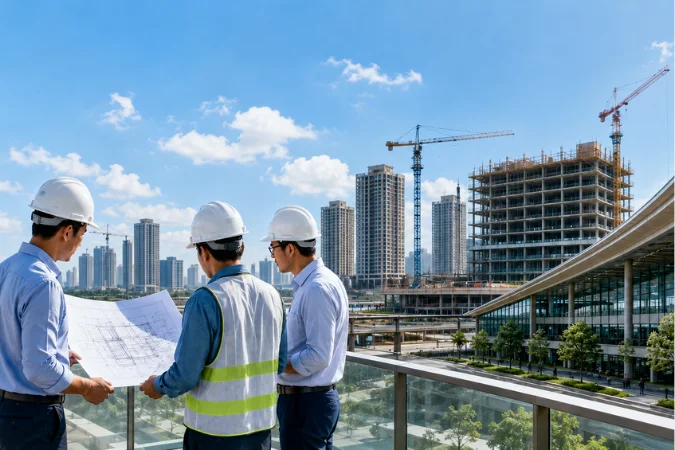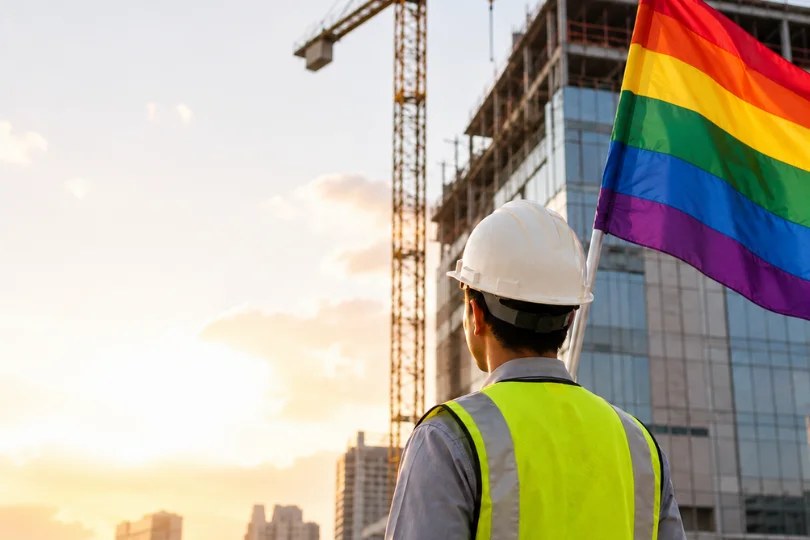
In construction, people talk a lot about building environments that support productivity, safety, and long-term performance.
Less often, they talk about whether the industry is building workplaces where people actually feel included while doing the work.
That conversation matters more than many teams still realize.
Construction has traditionally been seen as a male-dominated industry, shaped by rigid expectations around culture, communication, and behaviour on site. For many LGBTQ+ professionals, that has historically meant navigating workplaces where visibility can feel complicated, inclusion can feel inconsistent, and fitting in sometimes feels easier than being open.
And while the industry has evolved in many ways, parts of that reality remain.
More recent research continues to show that inclusion remains an ongoing challenge in construction. In 2025, research from the Australian Human Rights Institute examining LGBTQ+ workers in the construction sector found that barriers to recruitment, retention, and career progression still exist, with experiences of bullying, harassment, and exclusion continuing to affect some workers.
The research also highlights the importance of leadership support, workplace culture, and visible inclusion initiatives in helping professionals feel safe, respected, and able to thrive in the industry
Those findings suggest that while awareness of inclusion has grown, workplace experience can still vary considerably across the sector.
This raises an important question: If construction is responsible for creating spaces where people live, work, and thrive, how inclusive are the environments being built within the profession itself?
Workplace inclusion is often treated as a branding discussion.
In reality, it is also a workforce discussion.
Teams perform better when communication is stronger, psychological safety is present, and people feel respected within the environments they work in. That matters in every industry. But it matters especially in construction, where collaboration, coordination, and trust directly affect project delivery.
A workplace culture where people constantly feel the need to self-edit, stay invisible, or manage discomfort is not exactly setting itself up for stronger teamwork.
And younger professionals are paying attention to that.
Research and industry groups increasingly note that workforce expectations are changing, particularly among younger employees entering technical and professional industries. Inclusion, representation, and workplace culture are no longer viewed as secondary concerns. They are becoming part of how people evaluate employers, leadership, and long-term career sustainability.
In an industry already dealing with skills shortages and workforce retention concerns globally, that conversation stops being symbolic very quickly.
It becomes operational.
To be fair, progress is happening.
More construction organizations are introducing diversity and inclusion policies, employee support networks, and workplace initiatives aimed at creating safer and more respectful environments for LGBTQ+ employees. Industry groups such as Go Construct have also highlighted the importance of LGBT+ networks in helping professionals feel supported, represented, and connected within the sector.
But policy alone is usually the easy part. Culture is harder.
Because inclusion on paper and inclusion on site are not always the same thing.
The real test often shows up in everyday moments:
Those things shape workplace culture far more than a Pride Month graphic uploaded once a year.
And in construction, site culture matters. A lot.
This is not about forcing the industry to become something unrecognizable.
It is about recognizing that construction already depends on diverse teams working together under pressure across different disciplines, backgrounds, and perspectives.
Project managers, engineers, architects, consultants, contractors, safety officers, procurement teams, and field personnel all contribute differently to project outcomes. The stronger the collaboration, the stronger the project environment usually becomes.
That is one reason diversity and inclusion conversations are increasingly being linked to innovation, workforce resilience, and organizational performance across industries.
Because people generally do better work in environments where respect is treated as standard operating procedure. Not special treatment, just professionalism.
In the Philippines, conversations around workplace diversity and gender inclusivity continue to evolve across industries, including construction, engineering, and real estate.
And while progress may not always move at the same pace everywhere, expectations around workplace culture are clearly changing, particularly among younger professionals and multinational organizations operating across global standards.
For firms working across complex projects, large teams, and long-term developments, inclusive workplace environments are increasingly connected to broader discussions around leadership, people management, health and safety, and organizational culture.
Sustainable industries are not built only through stronger systems and structures. They also depend on the people behind them.
Construction has learned how to build increasingly intelligent buildings, more sustainable developments, and more technically advanced project environments.
Workplace culture deserves the same level of attention.
Creating LGBTQ+-inclusive spaces in construction is not about performative branding or corporate optics. It is about building professional environments where people can contribute, collaborate, and grow without feeling excluded from the industry they work in.
Because construction has always been about creating spaces that support people.
The industry should probably apply that thinking to its own workforce, too.
At JCVA, we believe stronger projects begin with stronger teams.
That includes creating professional environments built on respect, collaboration, safety, and accountability across every stage of project delivery. JCVA supports project environments where people and performance are protected.

We manage risks, build strong stakeholder relationships, and deliver solutions that reflect global best practices, backed by deep local industry knowledge.
If you're looking for a reliable partner to bring your vision to life, JCVA is here to build it with you.