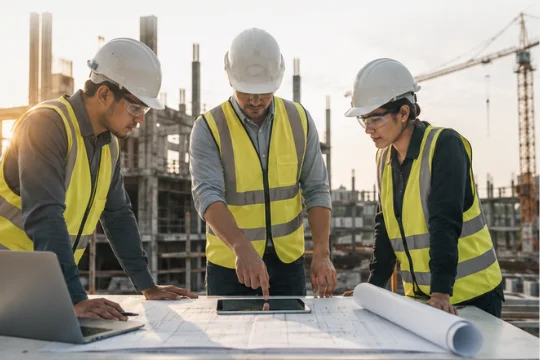
Projects are getting more complex.
More stakeholders. More systems. More revisions. More decisions that need to align at the right time.
As complexity increases, coordination becomes harder. And when coordination breaks down, delays, rework, and cost overruns often follow.
That is exactly why Building Information Modeling (BIM) matters more today than it did a decade ago.
The Design-Build Institute of America (DBIA), a professional organization that promotes design-build project delivery, notes that BIM helps improve collaboration, reduce errors, and strengthen project coordination throughout delivery. These benefits become increasingly valuable as projects grow more complex and involve more stakeholders.
In other words, as projects become more difficult to coordinate, better visibility stops being a nice upgrade and starts becoming a serious commercial advantage.
Not because BIM makes a project look more advanced.
Because it helps teams make better decisions when there is less room for error.
Most people associate BIM with 3D models – it is only part of the story.
Building Information Modeling (BIM) is a collaborative process that allows project teams to create, manage, and share project information through a centralized digital model throughout a project’s lifecycle.
Rather than relying on separate drawing sets and disconnected information sources, BIM creates a shared environment where teams can work from the same project data and coordinate decisions more effectively.
FARO, a digital reality technology company, explains that BIM helps teams collaborate, share information, and monitor project costs while avoiding the information silos that often form under traditional computer-aided design (CAD) workflows.
CAD refers to software used to create technical drawings and designs. While CAD focuses primarily on drawings, BIM creates a shared environment where project information, schedules, quantities, and costs can be connected and managed together.
That is the real value.
BIM gives teams a clearer picture of the project instead of multiple interpretations competing for attention.
Separate document sets, disconnected revisions, and poor coordination do not just create confusion. They create rework, design discrepancies, and late decisions that usually arrive with suspiciously bad timing.
The Design-Build Institute of America (DBIA) notes that BIM helps reduce errors and inconsistencies by identifying conflicts before construction begins. FARO makes a similar point, saying BIM gives project managers a clearer overview of the project, improves collaboration, and reduces the delays and mistakes that drive up overall cost.
In simple terms, complex projects do not fail only because of design issues. They also fail when information is handed off poorly between teams.
Project managers rarely lose sleep over the model itself.
They lose sleep over missed deadlines, unexpected costs, coordination issues, and changes that surface too late.
That is where BIM becomes valuable.
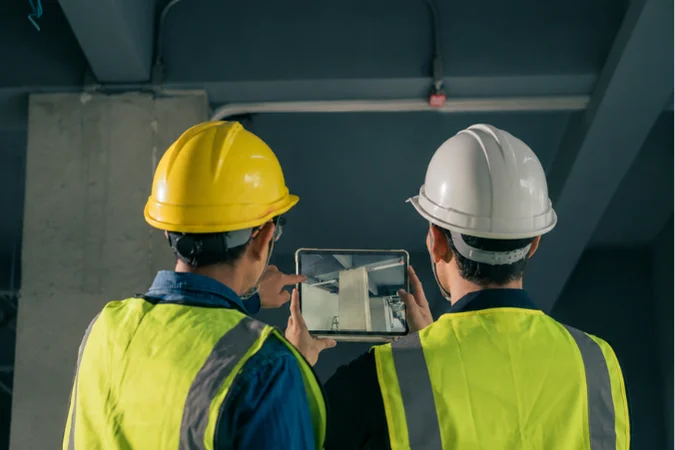
As projects grow more complex, teams need better visibility into how decisions affect schedules, budgets, procurement, and construction activities before work reaches the site.
The Design-Build Institute of America (DBIA) notes that BIM provides greater project visibility by connecting information across design, scheduling, procurement, and construction activities. When project data is integrated into a shared model, teams are better positioned to identify issues early and make informed decisions before work reaches the site.
For example, 4D BIM incorporates schedule information to improve sequencing and planning, while 5D BIM adds cost data to support estimating and budget control.
In simple terms, BIM does more than show what a project will look like. It helps teams understand when activities should happen, how they connect, and what they are likely to cost.
That visibility allows project teams to identify issues earlier and reduce the likelihood of costly surprises later in delivery.
DBIA argues that BIM can help ease the skilled labour gap by making the existing workforce more efficient. Detailed 3D models help teams identify issues earlier, shorten the learning curve for newer workers, reduce confusion in the field, and cut down on time-consuming corrections later. When experienced workers are harder to replace, reducing wasted effort becomes even more valuable.
BIM does not solve labour shortages on its own.
But it does help teams spend less time fixing preventable problems and more time doing high-value work.
That is a meaningful difference on any project, and an even bigger one on a difficult project.
BIM is not free.
Adopting BIM often requires investment in software, training, hardware, and process changes. That reality is one of the main reasons some organizations hesitate to make the transition.
BIM adoption requires investment in software, training, hardware, and process improvements. The exact cost varies depending on project size, organizational requirements, and the level of BIM implementation being pursued.
Those figures help explain why BIM adoption is often viewed as a significant upfront investment.
But cost is only one side of the conversation.
As digital project delivery becomes more common across the construction industry, organizations that invest in stronger coordination and information management capabilities are often better positioned to manage increasingly complex projects.
That is the part worth paying attention to.
The cost of BIM is visible.
It appears in software subscriptions, training programs, technology upgrades, and process improvements.
The cost of poor coordination is often much harder to see.
It usually appears later as rework, delays, variations, design conflicts, and decisions that should have been made earlier.
By the time those issues become visible, they are often far more expensive to address.
As projects become more complex, the question is no longer whether BIM requires investment.
The better question is whether teams can afford the operational inefficiencies that come from managing complexity without it.
As projects get more complex, the value of better coordination rises with them.
BIM matters more now because complexity is no longer just technical. It is commercial, operational, and increasingly tied to how well teams can see issues early, align decisions, and manage change before it becomes expensive. The data supports that case: stronger efficiency, better estimating, clearer scheduling, improved cost visibility, and fewer preventable errors all point in the same direction.
In simpler terms, BIM is not important because projects are digital.
It is important because projects are difficult.
And difficult projects need better visibility, not better guesswork.
Need BIM expertise, stronger coordination, clearer project visibility, and better decision-making across complex delivery environments? JCVA helps clients improve alignment, reduce rework, and make smarter decisions from planning to delivery. Contact us at technical@jcvassociates.ph or visit jcvassociates.ph.

We manage risks, build strong stakeholder relationships, and deliver solutions that reflect global best practices, backed by deep local industry knowledge.
If you're looking for a reliable partner to bring your vision to life, JCVA is here to build it with you.