The Philippine construction industry continues to show strong long-term potential.
While growth is expected to remain positive over the coming years, the real story in 2026 is where construction activity is actually accelerating and what is driving it.
According to the Philippine Statistics Authority (PSA), 181,832 construction projects were approved in 2025, while the total declared value of approved construction reached ₱601.42 billion, up 6.7% from the previous year. More notably, non-residential construction value increased 11.1% to ₱278.65 billion, highlighting sustained investment in commercial, industrial, and institutional developments. The National Capital Region, CALABARZON, and Central Luzon accounted for more than half of the country’s total construction value.
The momentum has continued into 2026.
PSA data shows that construction recorded 3.1% quarter-on-quarter growth in the first quarter of 2026, the fastest expansion among the country’s 16 production industries. At the same time, the Asian Development Bank noted that while public infrastructure activity eased in 2025, private construction expanded by 10.1%, reflecting continued confidence from private-sector investors.
Growth, however, is not happening evenly across every sector.
Some markets continue to attract stronger investment, larger project pipelines, and greater development activity than others.
Understanding where that momentum is concentrated helps developers, investors, and project teams identify where future opportunities are likely to emerge.
Infrastructure remains the foundation of the country’s construction growth story.
The difference today is that activity is increasingly supported by both public investment and Public-Private Partnerships (PPPs).
By the end of 2025, the PPP Center reported 251 PPP projects worth approximately ₱2.81 trillion, covering transport, water, traffic management, and healthcare infrastructure.
PPP, or Public-Private Partnership, refers to a project delivery arrangement where government agencies work with private-sector partners to finance and deliver public infrastructure.
The impact extends beyond the projects themselves.
Infrastructure often unlocks surrounding commercial, industrial, residential, and logistics development, making it one of the strongest indicators of future construction activity.
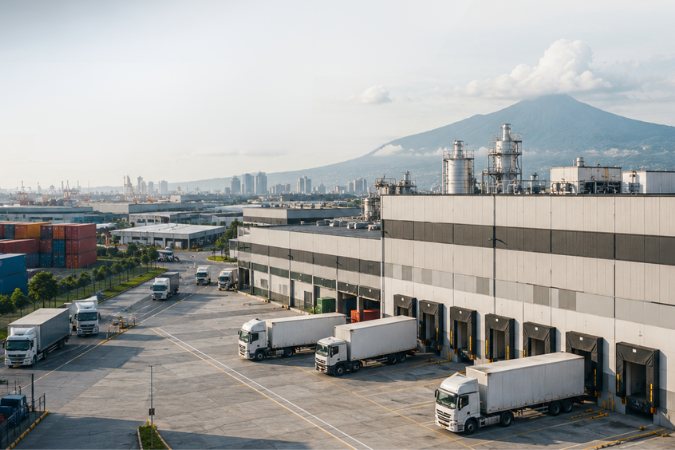
One of the fastest-growing segments of the market is industrial construction.
Recent government data shows that the Philippine Economic Zone Authority (PEZA) approved 157 new and expansion projects worth ₱140.688 billion during the first half of 2026, representing a 94.42% increase in approved investment value from the same period last year.
These investments include manufacturing facilities, industrial estates, warehouses, and logistics parks that support both domestic commerce and international trade.
As transportation networks improve and connectivity expands, more areas across the country are becoming viable locations for industrial investment.
For many developers, industrial facilities are no longer a niche market.
They are becoming a major growth opportunity.
Construction growth is increasingly tied to energy demand.
New industrial parks, commercial developments, transportation systems, and digital infrastructure all require reliable power.
The Department of Energy (DOE) identified 1,471 megawatts of renewable energy and energy storage projects moving toward grid entry in 2026, providing a clear indication that renewable energy construction continues to expand.
As development activity grows, investment in energy infrastructure continues to play an increasingly important role in supporting future economic activity.
That makes energy infrastructure one of the construction markets worth watching closely in 2026.
Tourism continues to generate development opportunities across multiple regions.
The Tourism Infrastructure and Enterprise Zone Authority (TIEZA) reaffirmed its 2026 investment roadmap through projects that extend beyond hotels and resorts. Current developments include the ₱365 million river water system for the San Vicente Flagship Tourism Enterprise Zone, together with visitor facilities, sewerage and wastewater infrastructure, heritage projects, and solar-lighting programmes.
Importantly, tourism projects often trigger additional development nearby.
Improved roads, utilities, retail spaces, and supporting infrastructure frequently follow, creating broader construction activity beyond the hospitality sector itself.
As visitor demand grows, tourism-related construction continues to create opportunities that extend well beyond the hospitality sector alone.
The most active construction markets rarely operate in isolation.
New transportation infrastructure can attract industrial investment. Industrial growth increases demand for energy projects. Tourism developments often create opportunities for roads, utilities, commercial spaces, and supporting facilities.
In many cases, the strongest growth opportunities emerge where several of these sectors intersect and reinforce one another.
That is why focusing only on headline growth figures can be misleading.
The real story is where investment is concentrated and how different sectors are supporting future development.
The Philippine construction market remains positive.
But successful projects are not driven by growth statistics alone.
They are driven by understanding where demand is strongest, where infrastructure is expanding, and where future development activity is likely to follow.
For developers and investors, that means looking beyond the overall market and paying closer attention to the sectors attracting long-term investment.
While the industry may be growing as a whole, some markets are clearly growing faster than others.
The Philippine construction industry continues to offer strong opportunities through 2026 and beyond.
Infrastructure remains the primary driver of activity, while industrial facilities, logistics developments, renewable energy projects, and tourism-related infrastructure continue to expand across the country.
Together, these sectors provide a clearer picture of where construction activity is accelerating.
For project owners, developers, and investors, understanding where these growth drivers overlap may be just as important as understanding the headline growth figures themselves.
Ready to capitalize on growth?
Understanding where construction activity is accelerating, and why, shapes smarter development and investment decisions. Early-stage project planning and market assessment can help identify opportunities, evaluate risks, and position developments in areas with strong long-term potential.
Through JCVA’s Project Development services, our team helps clients make more informed decisions before projects move into execution. Reach out to our team at technical@jcvassociates.ph or visit jcvassociates.ph to learn how we can support your next project.

We manage risks, build strong stakeholder relationships, and deliver solutions that reflect global best practices, backed by deep local industry knowledge.
If you're looking for a reliable partner to bring your vision to life, JCVA is here to build it with you.