In construction, “we will deal with it later” has always been one of the more expensive project strategies. Especially now.
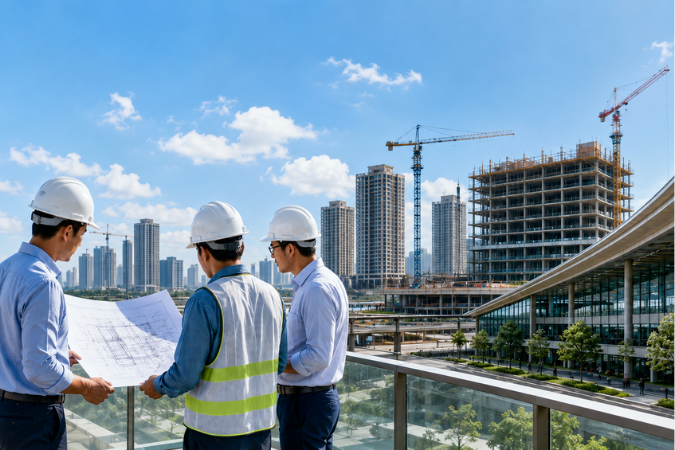
Across Southeast Asia and Australia, project teams are facing many of the same pressures: tighter schedules, higher sustainability expectations, labour constraints, and growing delivery complexity.
The response is becoming increasingly visible in the projects being funded and the technologies being adopted. From green industrial developments and net-zero requirements to prefab systems, BIM, digital twins, and AI-powered safety monitoring, the region is investing in new ways to improve project performance.
These trends may look different on the surface, but they point to the same goal: reducing uncertainty before it becomes delay, rework, or cost pressure.
That shift matters because the pressures facing the industry are not getting smaller. Urbanisation, sustainability targets, labour shortages, rising material costs, and stricter compliance expectations are all reshaping how projects are planned and delivered across the Asia-Pacific region.
And increasingly, the projects performing best are usually the ones using better systems long before problems appear on site.
One of the region’s biggest signals came from Australia’s push toward green iron production.
In 2025, the Australian Government committed AUD 1 billion through its Green Iron Investment Fund to accelerate commercial-scale green iron manufacturing, supported by the country’s renewable energy capacity and iron ore resources.
That is not just an environmental story. It is also a construction and infrastructure story.
Industrial facilities, logistics systems, renewable energy infrastructure, processing plants, and export-related developments will all require large-scale project delivery support as the sector expands.
More importantly, it reflects how sustainability goals are increasingly influencing investment decisions across construction and development.
Australia is also pushing further into operational sustainability requirements at the city level.
Sydney’s planning policy requires all new commercial developments to achieve net-zero energy output from 2026, combining energy efficiency measures with renewable energy integration.
That matters because it changes how projects are approached from the very beginning.
Net-zero targets affect:
Once sustainability requirements become part of planning policy, they need to be addressed from the earliest stages of project development.
Performance has to be designed into the project early. Not value-engineered back in later after half the decisions are already locked.
The Asia-Pacific construction sector is also seeing rapid growth in digital construction tools, particularly Building Information Modelling (BIM), digital twins, and integrated project data systems.
A 2026 study published in Energy and Buildings noted that BIM and digital twin technologies are helping reduce embedded carbon while improving energy efficiency across fast-urbanising Asia-Pacific developments.
That shift is significant because digital coordination is increasingly connected to:
This is another way of saying that spreadsheets and optimism are slowly losing market share.
Good digital coordination does not just create prettier dashboards. It helps teams make decisions earlier, identify issues faster, and reduce the amount of expensive guesswork projects traditionally absorb during execution.
Singapore remains one of the strongest regional examples of prefabricated construction at scale.
The country’s Prefabricated Prefinished Volumetric Construction (PPVC) approach has reportedly reduced on-site labour requirements by up to 40%, particularly across high-density residential developments.
That matters in a region where labour availability, productivity pressure, and urban density continue to affect project delivery.
Prefab and modular systems are gaining traction because they help:
They also shift more project risk into manufacturing and coordination stages earlier in the process.
This means teams need stronger planning and integration long before site installation begins.
Construction safety monitoring is also becoming more technology-driven.
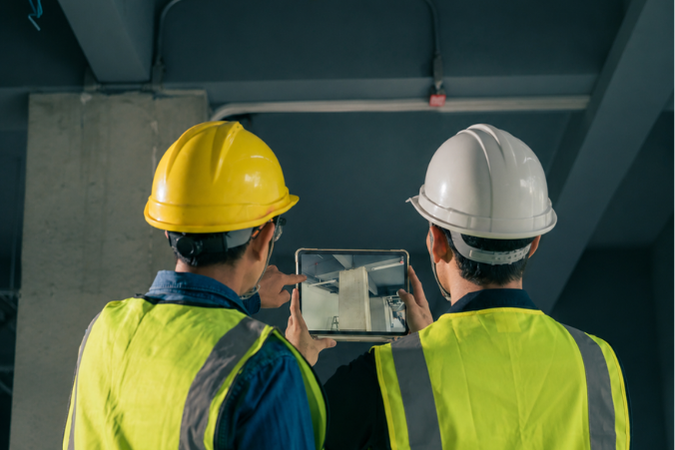
A January 2026 study published in Scientific Reports found that AI-powered drone surveillance systems using deep learning could detect PPE violations more quickly and accurately than traditional manual site walkthroughs.
That reflects a broader shift happening across the industry: site monitoring is becoming increasingly real-time.
Instead of relying entirely on periodic inspections, project teams now have access to:
The Australian Government’s Department of Infrastructure has officially begun utilizing drones for site inspections, surveying, progress monitoring, safety inspections, 3D mapping, and hazard reduction.
The Australian Government also states that increased drone adoption will generate occupational health and safety benefits for construction.
Moreover, this has trickled down to commercial implementation. Measure Australia, one of the region’s largest spatial surveying companies, already offers AI-powered construction safety monitoring. They mention detecting hard hats, high-visibility clothing, and PPE compliance using drones and AI.
In Southeast Asia, Singapore’s construction sector is among the region’s leaders in AI adoption through the Building and Construction Authority.
Relevant initiatives include AI-enabled site monitoring, digital construction management, BIM-integrated site monitoring, digital twins, robotics, and autonomous inspection technologies.
These are being encouraged under Singapore’s Construction Industry Transformation Map and Smart Construction initiatives. Although these programmes don’t mandate drone PPE monitoring specifically, they strongly promote AI-assisted site monitoring.
It is important to note that these implementations do not remove the need for experienced safety professionals, but it does improve visibility.
And in construction, better visibility usually means better decisions before issues become incidents, delays, or very expensive lessons learned.
Construction across Southeast Asia and Australia is being shaped by stronger sustainability requirements, digital technologies, and new approaches to project delivery.
That shift is changing how projects are designed, procured, coordinated, and monitored from the earliest stages of delivery.
Green industrial investment, net-zero policy, prefab systems, BIM coordination, digital twins, and AI-powered monitoring are not separate trends anymore.
They are increasingly part of the same conversation: building projects that perform better under growing commercial, environmental, and operational pressure.
Because in modern construction, the teams with the best outcomes are usually not the ones reacting fastest. They are the ones who saw the problem coming earlier.

We manage risks, build strong stakeholder relationships, and deliver solutions that reflect global best practices, backed by deep local industry knowledge.
If you're looking for a reliable partner to bring your vision to life, JCVA is here to build it with you.