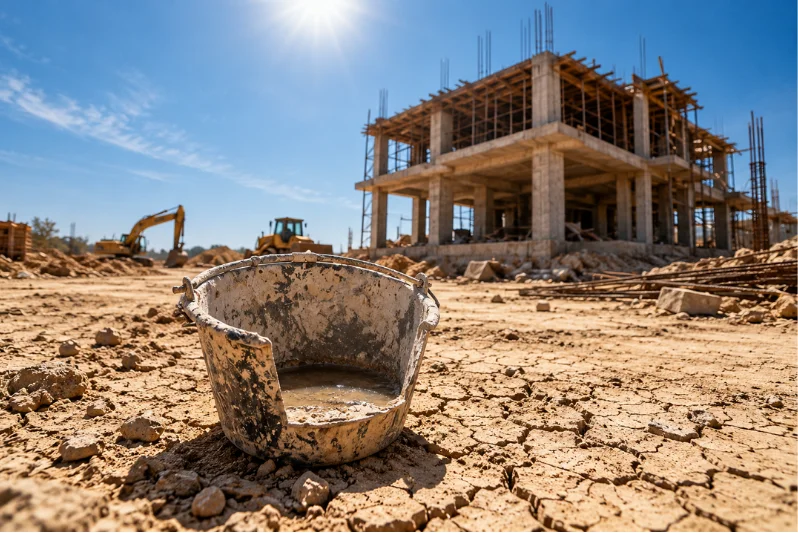
Preparing for El Niño takes more than keeping extra water on site.
The national weather agency, PAGASA, projected in its September 23, 2026 advisory that El Niño would intensify during October–December and persist through the first half of 2027. An October 5 government briefing also forecast nationwide drought or very dry conditions by the end of March 2027.
The drought outlook describes rainfall deficits. Actual water availability also depends on local supplies, consumption, and preparedness. A comprehensive site risk assessment should connect these conditions with worker protection and the resources needed for upcoming work
Assess how changing conditions affect people and planned work.
Start by identifying risks to upcoming work and deciding how the team will respond. For El Niño preparation, this includes:
Review the work ahead
Consider the project’s location and stage. Outdoor work can need different preparations from indoor work or systems testing.
Check local conditions
Read current PAGASA updates alongside site observations and local utility notices.
Review water supply early
If a notice affects an approved water source, assess alternatives before water-dependent work begins.
Assign someone to respond
Record each key risk, who will handle it, and when action is needed.
For heat-exposed activities, this means checking how daily work arrangements need to change to protect workers.
Use risk review to guide daily worker protection.
For heat-related risks, the Department of Labor and Employment’s (DOLE) Labor Advisory No. 08, series of 2023, directs private-sector employers to assess workers’ heat exposure and relevant existing health conditions.
The findings should guide ventilation and adjustments to rest breaks or work locations. Alongside suitable clothing and protective equipment, these controls belong in Environment, Health and Safety (EHS) planning, supported by worker information and emergency procedures.
Include worker protection when assessing the site’s water needs.
DOLE’s advisory also covers free and adequate drinking water. The site’s water plan needs to provide for this and sanitation alongside construction activities.
Construction use ranges from cleaning and dust control to systems testing. Concrete curing also requires water to keep concrete moist as it gains strength. When these use cases overlap, teams need to check whether approved sources and storage can meet demand.
If the earlier supply review identifies a shortfall, assess alternatives against the needs of those activities. Water quality and delivery timing matter as well as the quantity available.
Water-saving measures should preserve drinking water and sanitation while maintaining concrete-curing and testing requirements. Where supply remains insufficient, teams need to review when affected activities can proceed.
Changes in schedule need the right resources and approvals.
A water-supply shortfall can affect activities that determine the completion date. Teams need to assess whether an alternative supply or a timing change provides a workable response. Heat controls can also affect timing, including whether tasks should move to periods of lower heat exposure.
Under DOLE’s advisory, employers and workers may agree to adjust working hours while maintaining total daily or weekly hours. These arrangements need suitable supervision, site access, and resources.
Longer shifts or tighter schedules used to recover lost time must still protect workers and allow enough time to meet quality requirements.
If additional water storage is the chosen response, its approval and delivery need to fit the revised programme. Procurement plans should make provisions for temporary cooling, monitoring equipment, and storage space needed on-site.
PAGASA also notes that localised heavy rainfall can occur during El Niño. Backup arrangements should therefore cover heavy rain, on top of heat, water fluctuation, and power constraints.
Track whether agreed adjustments are ready when work needs them.
The programme gives site reporting a clear focus: check resource approvals and deliveries against affected activities. For additional water storage, this means tracking whether it will be available before water-dependent work starts.
These updates help daily coordination address immediate concerns. Weekly reviews assess developing risks. Project and construction managers coordinate the response. EHS personnel assess worker protection and technical specialists assess building systems.
These same resource checks continue through commissioning, which checks and tests whether installed systems work as intended. If water or power constraints affect testing, the revised plan should preserve the required checks. It should also identify outstanding tests and who will complete them before handover.
Check that each response is workable before affected work proceeds.
A revised date alone does not resolve a resource constraint. Confirm that the agreed supply and worker protections will be in place when needed, then track their readiness against the work they support.
JCVA helps owners connect risk planning with day-to-day project delivery.
Our Project Management and Construction Management services bring together schedule reviews, site coordination, and project controls amidst seasonal built environment conditions. These help teams align resources with upcoming work and identify decisions that need attention.
Our EHS Services also complement planning through risk assessments and site monitoring, helping teams review worker-protection measures as conditions change.
Contact technical@jcvassociates.ph or visit https://www.jcvassociates.ph/.

We manage risks, build strong stakeholder relationships, and deliver solutions that reflect global best practices, backed by deep local industry knowledge.
If you're looking for a reliable partner to bring your vision to life, JCVA is here to build it with you.


 United States
 Australia
 United Kingdom