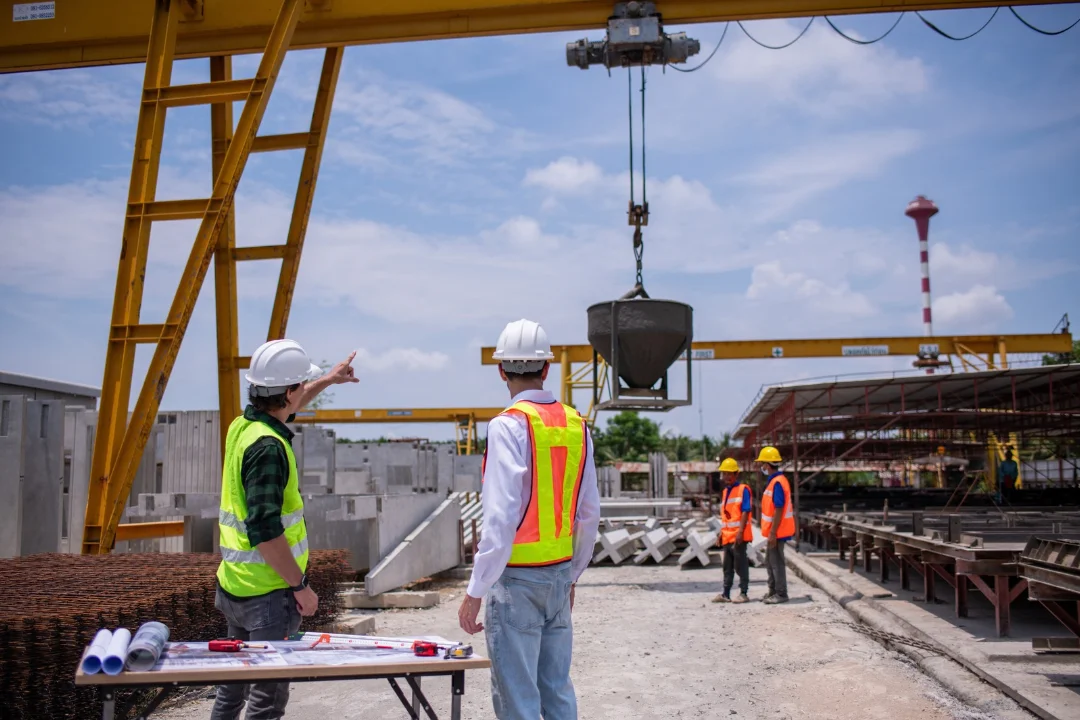
Feasibility, planning, procurement, execution, all the way through testing: PPP projects need a clear path.
A Public-Private Partnership (PPP) brings the government and a private-sector partner together to deliver infrastructure or public services. Depending on the agreement, the partner can take responsibility for financing, construction, long-term operations, or all of the above.
A Philippine News Agency report citing PPP Center data placed the Philippine PPP pipeline at 252 projects worth ₱3.16 trillion as of May 4, 2026. For agencies and prospective partners, the next step is understanding what each project needs before it can move forward.
Look for evidence that the proposed service can be delivered and paid for.
Projects enter the pipeline at different stages. Some are still developing their business case; others are preparing for bidding. A place on the list tells you a project is being considered, but does not establish its readiness for investment or construction.
Assessing that readiness starts with who will use the service and how it will be funded. Site availability and required approvals also need to be understood before delivery commitments are made.
The Project Development and Monitoring Facility (PDMF) supports this preparation by funding feasibility studies and tender documents. Its advisory support also extends to bidding and other project-development activities.
According to its September 1 release, the PDMF Committee approved assistance for three projects at meetings held on July 12 and August 12, 2026. Fuel Marking Program support was provisional. These decisions concerned PDMF assistance rather than approval on project implementation.
Feasibility tests whether a needed service can be delivered at a workable cost.
Start with the problem the project is intended to solve. Understanding demand helps teams determine the capacity required and assess whether users can afford the service.
Site conditions then help establish what delivering that service will involve. Difficult ground conditions or additional land needs, for example, can affect the design and its cost. Financial assessments should reflect those findings, including future operating costs.
Held last December 10–11, 2025, the PPP Center’s workshop for the Philippine Ports Authority covered feasibility studies alongside project structuring and risk allocation. In practice, these assessments need to inform one another: if expected demand changes, capacity and revenue assumptions need another look.
Turn feasibility findings into clear commitments for delivery.
Planning establishes who will manage the risks identified during the study. World Bank guidance recommends assigning each risk to the party best able to manage it.
Take land access as an example. The agreement should identify who will secure it and when it is needed, alongside the contractor’s responsibility to carry out construction.
Prospective partners need reliable information to assess those commitments. Site investigations and cost estimates help them understand the work involved and the risks they are being asked to manage.
Market sounding checks how prospective partners respond to the proposed arrangements.
The process gathers feedback from potential private partners and financing institutions. Their questions about payment terms or service requirements can reveal what needs clarification while the project is still being planned.
On June 17–19, 2026, the Department of Transportation (DOTr) organised market-sounding activities in Singapore, supported by the PPP Center and Infrastructure Asia.
The Asian Development Bank (ADB) presented the MRT-3 and Metro Manila Subway operations and maintenance proposals. The International Finance Corporation (IFC), on the other hand, presented the LRT-2 rehabilitation, operations and maintenance proposal.
Feedback is then used to refine the documents bidders will receive. If the proposed scope changes, the related cost and revenue assumptions should also be updated. This is to ensure that bidders are assessing a consistent proposal.
Project information should remain usable when responsibility passes to the delivery team.
Procurement requirements should be considered during feasibility and planning. Under Philippine PPP rules, publication of the invitation to bid follows project approval.
Before inviting bids, the required service and evaluation criteria are made clear. Supporting technical information should allow proposals to be compared while leaving room for private-sector expertise.
Preparation should establish:
During execution, these provide the basis for managing the work and reviewing changes. Testing should then check whether the completed work meets the agreed requirements. Outstanding issues should be documented for resolution before handover.
The PPP Center’s Project Monitoring Framework and Protocols reflect this need for continuity. They cover development through implementation and identify the information and reporting responsibilities needed to monitor projects across these stages.
In PPP projects, being clear about what is needed is crucial in moving on to the next stage.
Resolve issues that affect readiness and assign responsibility for outstanding work. Each team taking the project forward should understand the decisions already made and what still needs attention.
JCVA supports project owners through Project Development, as well as Quantity Surveying & Cost Consultancy.
Its feasibility and cost planning services help teams assess proposals early. Tender documentation and procurement strategy support carry that work into bidding preparation.
Contact technical@jcvassociates.ph or visit https://www.jcvassociates.ph/.

We manage risks, build strong stakeholder relationships, and deliver solutions that reflect global best practices, backed by deep local industry knowledge.
If you're looking for a reliable partner to bring your vision to life, JCVA is here to build it with you.


 United States
 Australia
 United Kingdom