In construction, surprises are rarely the fun kind. Especially when they are underground.
That is why early geotechnical investigation matters. It helps teams understand subsurface conditions before design moves too far, which means better decisions on foundations, grading, drainage, and construction methods from the start.
That matters even more in the Philippines, where risk is not exactly in short supply. A 2025 World Bank case study notes that at least 60% of the country’s land area and close to 74% of its population are exposed to multiple natural hazards, including typhoons, earthquakes, floods, storm surges, droughts, and landslides, due to the country’s location along the Pacific Ring of Fire and within a cyclone-prone region.
Which raises a fairly important question before construction even begins: how well does the project team actually understand the ground of the structure it will sit on?
In environments like that, subsurface conditions are not just technical details. Soil behaviour, drainage performance, slope stability, and foundation response can all directly affect how a structure performs during extreme events. That means poor ground data does not just increase design uncertainty. It can also increase long-term project vulnerability.
When the ground conditions are uncertain in a country already exposed to that level of risk, early investigation stops being a nice-to-have. It becomes basic project intelligence.
Before a structure goes up, the soil is already shaping what is possible, what is risky, and what will cost more later.
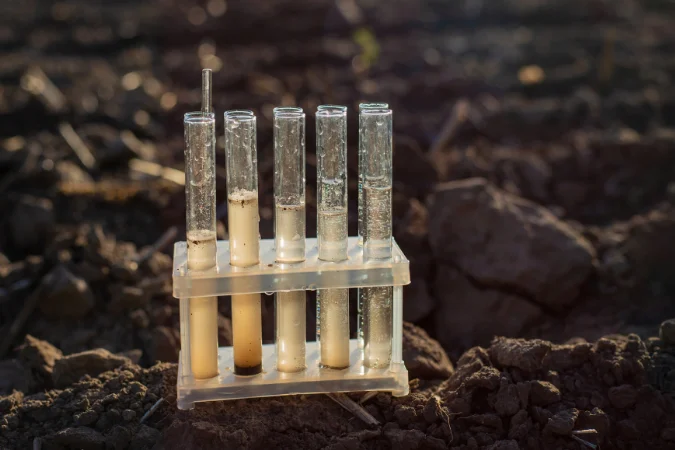
A geotechnical investigation typically includes reviewing available records, carrying out on-site exploration, collecting samples, and testing them in the laboratory. The point is to understand how the ground is likely to behave before the project starts, rather than making expensive assumptions. That information then guides foundation design, earthworks, retaining structures, drainage, and construction approaches.
That is a lot of influence for something most people never see.
Which is exactly why missing it early gets expensive later.
If subsurface issues are discovered late, everything gets harder.
Designs may need to change. Construction methods may need to change. Budgets and schedules may suddenly develop trust issues.
Early investigation can reveal buried obstacles, voids, uncontrolled fill, soft soils, and other conditions that require special handling, while also helping teams choose more efficient and cost-effective construction methods. There is also now a stronger policy signal behind that. In 2025, the Government Procurement Policy Board (GPPB), the Philippine government body that sets procurement policy for public projects, explicitly included site investigation, soils and foundation investigation, and construction materials investigation as part of detailed engineering activities for infrastructure projects.
In other words, this is not just good technical housekeeping. It is part of doing the groundwork properly.
Site investigations do more than support design.
They also help teams reduce risk exposure.
Good ground data helps identify hazards such as erosion, settlement, liquefaction, and unstable soil behaviour before they become safety problems or design costs. That point feels especially relevant in the Philippines. In May 2025, the Philippine Institute of Volcanology and Seismology (PHIVOLCS) turned over enhanced liquefaction and tsunami hazard maps to the General Santos City local government to support disaster risk reduction, land-use planning, and preparedness.
That is the kind of information project teams want before site works begin, not halfway through a meeting that suddenly includes the phrase “unexpected ground conditions.”
A good investigation does not slow a project down. It helps prevent delays later.
Understanding subsurface conditions is critical to the safety, stability, and longevity of a structure. The investigation scope also needs to be matched to the project, location, and geologic environment, because a shallow, low-risk build and a larger, more complex development do not warrant the same level of guesswork.
And in real projects, site conditions do contribute to delays. A 2025 study on projects handled by the Department of Public Works and Highways Region XI, which covers the Davao Region, listed unworkable site conditions as one of the reported causes of delay, alongside right-of-way issues, permit problems, and plan revisions.
So yes, early geotechnical work costs time. But late geotechnical surprises usually cost more time.
And more money.
Early geotechnical investigation is not just a technical box to tick.
It is one of the smartest ways to protect a project before serious money starts moving.
It helps teams design better foundations, reduce safety risks, avoid rework, and make decisions with fewer underground surprises. In a country where 60% of the land area and nearly 74% of the population are exposed to multiple hazards, that is not over-preparation. It is just sound construction judgment.
Because in construction, finding problems early is called planning. Finding them late is called variation.
Ready to reduce site risk and make better project decisions from the ground up? Contact us at technical@jcvassociates.ph or visit jcvassociates.ph.

We manage risks, build strong stakeholder relationships, and deliver solutions that reflect global best practices, backed by deep local industry knowledge.
If you're looking for a reliable partner to bring your vision to life, JCVA is here to build it with you.